

Introduction
Air quality management (AQM) refers to the strategies, policies, and practices aimed at monitoring, controlling, and improving the quality of air to protect human health and the environment. In South Africa, a country with a diverse economy heavily reliant on mining, industry, and energy production, effective AQM is crucial. As of 2026, South Africa ranks 47th globally in air pollution, with an average Air Quality Index (AQI) of 69 and PM2.5 concentrations at 18.76 µg/m³—nearly four times the World Health Organization’s annual guideline. This article explores the importance of AQM in the South African context, highlighting challenges, policies, and the path forward.
The Importance of Air Quality Management in South Africa
South Africa’s air quality issues stem from its industrial heartlands, particularly in provinces like Mpumalanga and Gauteng, where coal-fired power plants, petrochemical facilities, and mining operations dominate. These activities release pollutants such as particulate matter (PM2.5 and PM10), sulphur dioxide (SO2), nitrogen dioxide (NO2), and volatile organic compounds (VOCs), which pose severe health risks. Poor air quality disproportionately affects vulnerable populations, including low-income communities living near industrial zones, leading to respiratory diseases, cardiovascular issues, and premature deaths.
In the broader African context, air pollution contributed to 1.1 million deaths in 2019, making it the second leading risk factor for mortality on the continent. In South Africa specifically, energy production accounts for 23% of ambient PM2.5 levels, exacerbating conditions like asthma, heart disease, and stroke. Effective AQM not only safeguards public health but also supports economic growth by reducing healthcare costs, improving worker productivity, and promoting sustainable development. For instance, in urban areas like Johannesburg and Cape Town, where AQI levels can fluctuate—currently standing at a “good” 25 in Johannesburg as of February 2026—ongoing management is vital to prevent spikes during industrial peaks or seasonal events.
Beyond health, AQM is essential for environmental protection. Pollutants contribute to acid rain, soil degradation, and biodiversity loss, impacting South Africa’s rich ecosystems. In a country facing climate change pressures, better air quality aligns with global commitments, such as those under the Paris Agreement, by reducing short-lived climate pollutants.
The visual impact of industrial pollution in areas like the Highveld Priority Area underscores the urgency: smokestacks and cooling towers dominate landscapes, releasing plumes that affect nearby communities.
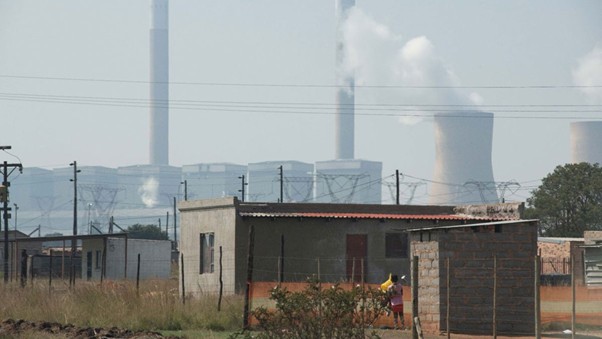
South Africa’s ‘Deadly Air’ Case Highlights Health Risks from Coal | Human Rights Watch
Such scenes highlight how proximity to polluters amplifies risks for residents.
Key Challenges in Air Quality Management
Despite progress, South Africa grapples with significant hurdles in AQM. Rapid urbanization and industrialization have intensified emissions, with PM2.5 levels in cities ranging from 19.3 µg/m³ in some areas to over 60 µg/m³ in others. Challenges include limited political will, inadequate enforcement of regulations, and insufficient monitoring infrastructure. For example, priority areas like the Mpumalanga Highveld, declared in 2007, still experience non-compliance with national ambient air quality standards (NAAQS), leading to ongoing health crises.
Household air pollution from coal and wood burning in poorer communities adds another layer, particularly affecting women and children. In Cape Town, where the user is located, studies from 2006–2015 showed that 87% of days posed moderate to high health risks due to PM10 and NO2 levels. Fragmented governance, with responsibilities split across national, provincial, and municipal levels, often results in poor coordination and delayed action.
Economic factors exacerbate these issues; industries resist stricter controls due to costs, while funding for clean technologies remains limited. As Africa urbanizes, projections indicate megacities like Johannesburg could see doubled pollution-related health risks in the coming decades without intervention.
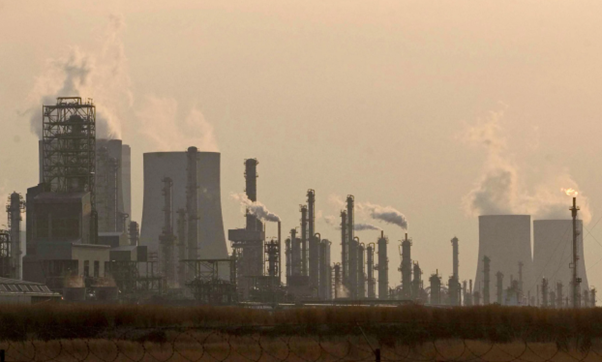
Sasol’s South Africa Plants Threatened by Emission Standards – Bloomberg
Images of vast industrial complexes, such as those in Secunda, illustrate the scale of the problem, where emissions from petrochemical plants blanket surrounding arid lands.
Policies and Initiatives
South Africa has a robust legislative framework for AQM, starting with the National Environmental Management: Air Quality Act (AQA) of 2004, which shifted from source-based to effects-based management. Key instruments include the National Ambient Air Quality Standards (2009), National Dust Regulations (2013), and the National Framework for Air Quality Management (2017). Priority areas, such as the Highveld, Vaal Triangle, and Waterberg-Bojanala, have dedicated air quality management plans (AQMPs) to target hotspots.
In 2025, South Africa leveraged its G20 Presidency to advance the Africa Clean Air Programme, promoting continental action and integrating air quality into development agendas. Eight of nine provinces now have AQM action plans, and most metropolitan areas, including Cape Town, have municipal strategies supported by national monitoring systems. Initiatives focus on compliance, network expansion, and public awareness.
Preventive policies have reduced emissions by 10–35% in key sectors, while targeted measures lower pollutant concentrations by 5–20%. However, enforcement remains a gap, with calls for stricter regulations and integrated approaches to address disproportionate impacts on vulnerable groups.
Future Outlook and Recommendations
Looking ahead, South Africa must prioritize integrated strategies, including transitioning to cleaner energy, enhancing monitoring with low-cost sensors, and fostering public-private partnerships. International collaboration, such as through the UN Environment Programme, can provide technical support. Education campaigns to raise awareness about household pollution and advocacy for equitable policies will be key.
By addressing these, South Africa can reduce its pollution burden, improve health outcomes, and set an example for Africa. As global air pollution statistics show stark disparities, with Sub-Saharan Africa facing high risks, proactive AQM is not just important—it’s imperative.
Conclusion
Air quality management in South Africa is vital for protecting public health, the environment, and economic stability amid ongoing industrialization. While challenges persist, strong policies and recent leadership initiatives offer hope. Sustained commitment from all stakeholders is essential to ensure cleaner air for future generations.